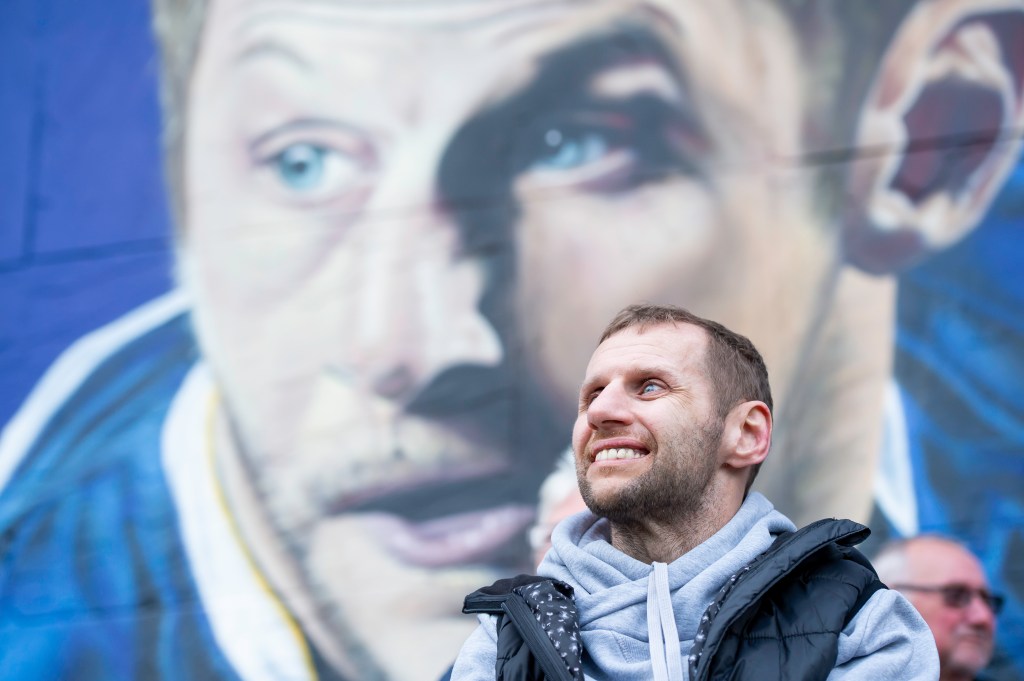
It’s hard to describe Rob Burrow to someone that’s never heard of him.
One of my earliest memories of Rob Burrow was at the 2017 Super League Grand Final between Castleford Tigers and Leeds Rhinos.
Me and my dad had travelled for four hours to Manchester to watch our team (Castleford) play in their first ever Super League Grand Final, in a year that they’d been easily the best team in the country. They were unbelievable that year, and yet, they lost. Comfortably.
At one point, a tiny Leeds player played a great pass, or made a great run. I don’t remember, honestly. But I asked my dad who it was. By that point, I was miserable. My dreams were being torn apart in front of my eyes, but I had to admit: that player in the number seven was good.
“Rob Burrow”, my dad responded. “He’s ridiculous.”
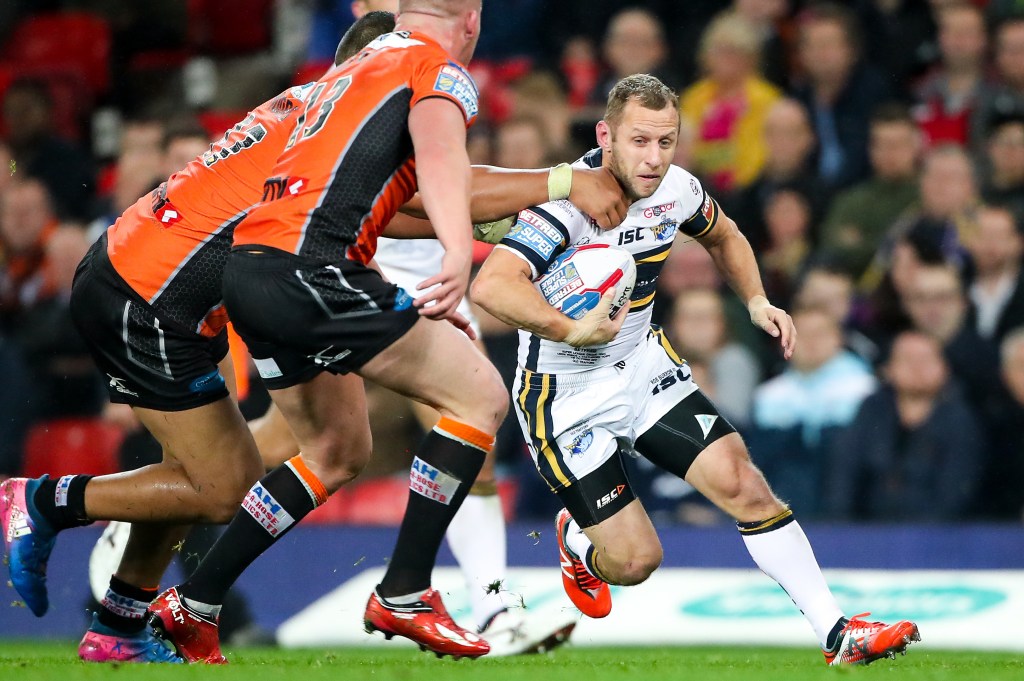
Indeed, he was. Watching Super League as a kid, as was very common in the Mitchell household, Rob Burrow was always a player that caught the eye.
You couldn’t hate him. You just couldn’t. Leeds Rhinos were always a rival to my team, and often beat us. But I could never bring myself to hate Rob Burrow, that little man who did nothing but turn up and be brilliant.
I like to think my dad is pretty good at detecting legends. My only other comparable memory was when I was six years old, in 2010, and I asked who the best footballer in the world was.
“Lionel Messi” was the response, and I think he’s turned out to be pretty good.
Five foot five
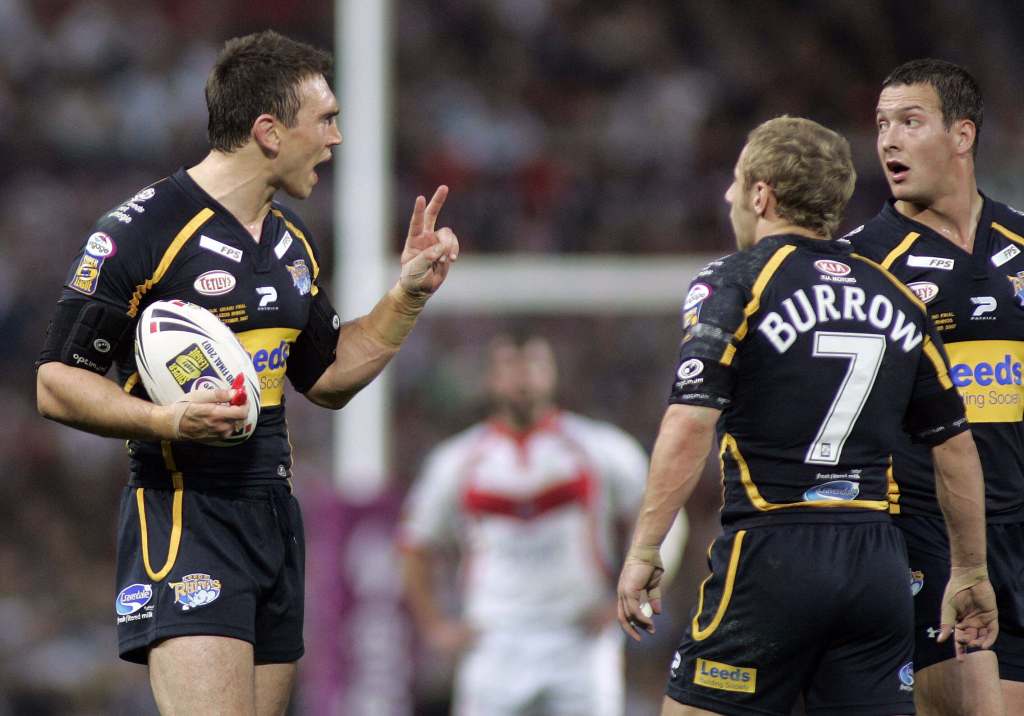
“The greatest team the game had ever seen, spearheaded by a five foot five kid from Castleford.”
Five foot five. That’s how tall Rob Burrow was. A rugby player, standing at just five foot five.
It defied logic.
Born in Pontefract, he grew up in Castleford, West Yorkshire. Rugby league territory. And wow, he really did play rugby league.
Starting at the age of seven, playing for local side Castleford Panthers, he was always tiny. All tiny players get told they’ll never make it in the sport – “you have to be big and powerful”, they say.
When I was younger, I’d tell my friends that I wanted to play rugby. I’d turn up to training, wearing the number seven that Rob Burrow wore so prominently, and I enjoyed it, but I never felt that I belonged. My friends laughed whenever I said I wanted to play rugby, and I gave up, because I believed I’d never make it.
Rob Burrow wasn’t like me, because he believed he’d make it.
His belief payed off. He was magic. At seventeen, he joined Leeds, one of the biggest and best clubs in the country. They won the Challenge Cup that year, and they saw something in that diminutive half-back from a small town.
Before long, he was making his debut from the bench, and then he was making his first start, scoring a try against Warrington. After that year, he was named Young Player of the Year in Super League.
He may have been tiny, but he was brave. His talent on the ball was paired with an incredible ability to not shy away from anything – not even players a foot taller than him. Immense bravery,
He didn’t stop there. He kept going, as Rob Burrow always did. He was selected to represent England and Great Britain. He won Super League with Leeds in 2004. He won the World Club Challenge against NRL champions the Canterbury Bulldogs in 2005.
From there, he kicked on, becoming one of the most decorated players in rugby league history, winning league title after league title, all the way through to 2017, and being a key figure as Leeds Rhinos built a dynasty. The greatest team the game had ever seen.
The greatest team the game had ever seen, spearheaded by a five foot five kid from Castleford.
After his final game, he lifted the Super League trophy for the last time, but not before branding it a “fairytale ending” in his post-match interview.
Rob Burrow after rugby
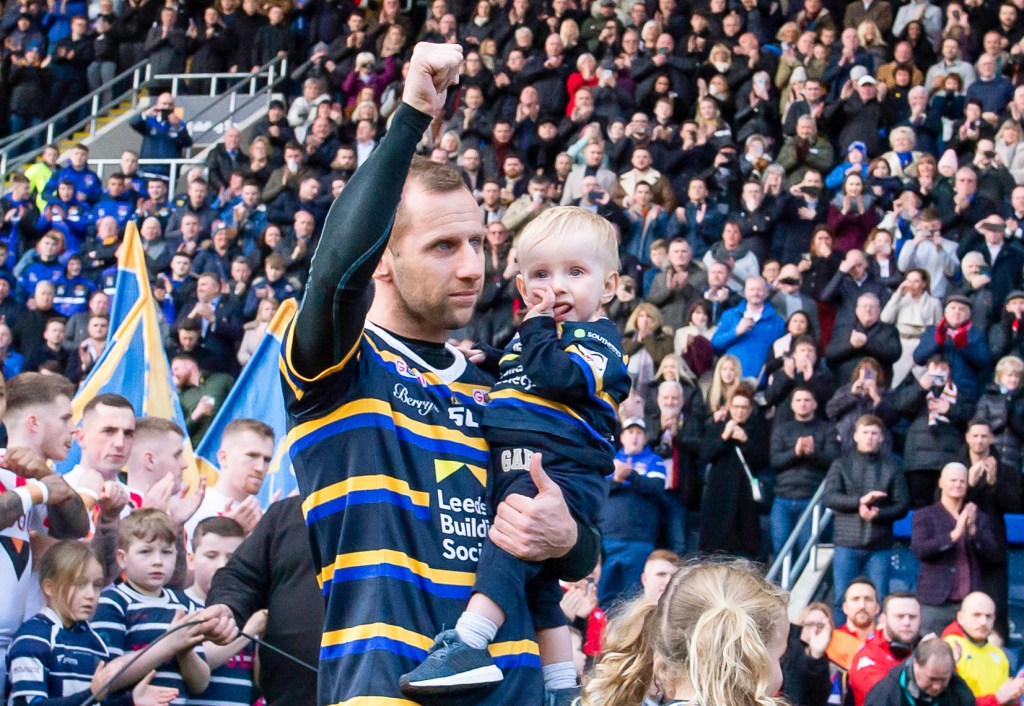
“Rob Burrow is very rare.”
For a player that won the league eight times, the cup twice and the World Club Challenge three times, and that scored the greatest try in Grand Final history, to be mostly remembered for anything other than their talent is very rare. But that’s happened.
Because Rob Burrow is very rare.
In that final game, his teammate, Danny McGuire (now a coach for Castleford Tigers) became only the third player to ever win the man of the match award in the Grand Final twice, with the other two being Kevin Sinfield and Rob Burrow, both also of Leeds Rhinos.
He became a member of the Leeds Rhinos coaching staff after retirement, but that position couldn’t last long, as he was diagnosed with motorneurone disease (MND) in 2019, and he couldn’t continue.
One of rugby’s greatest players only had years left to live, and the news was met with sadness from people within the game.
It would have been easy to accept his fate: he had a year, maybe two, to live, they said.
Rob Burrow was never a man to just accept anything.
He was brave, and he made it his own.
Bravery
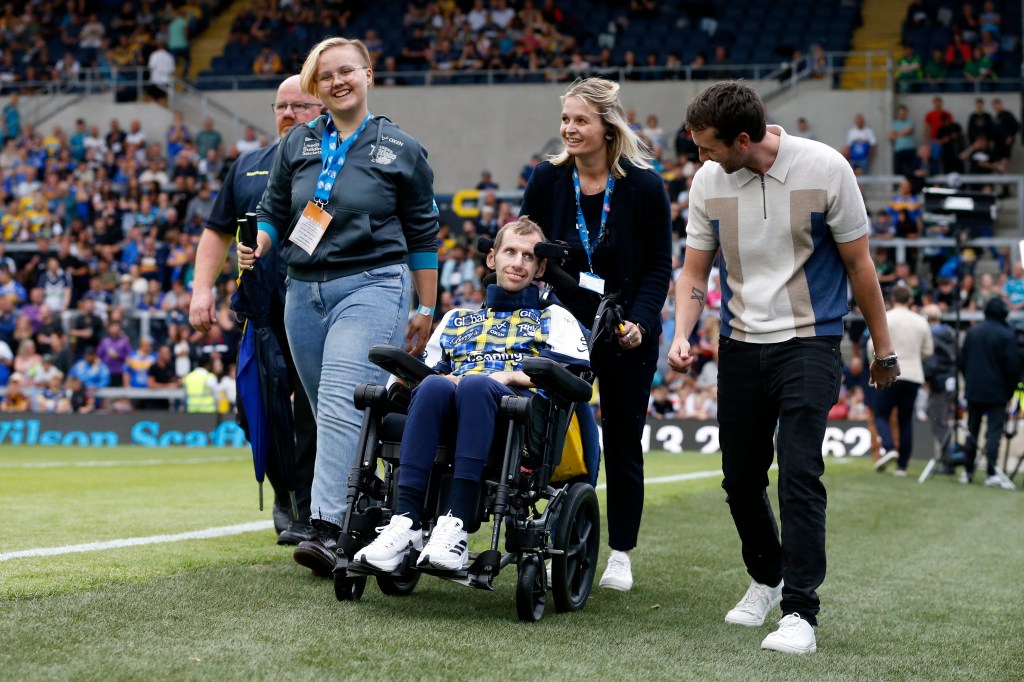
“I am a prisoner in my own body. That is the way that MND gets you. The lights are on, but no-one is home.”
He’d “fight until his final breath”, he said. His life would never be the same again, but he fought. He fought for his family, his kids, just as he’d fought for his teammates all the way through his glittering career.
Just a month after his diagnosis, he briefly played in former team-mate Jamie Jones-Buchanan’s testimonial match at a packed Headingley Stadium, and was greeted with the same admiration he’d received his whole life.
Burrow went on to campaign for those with MND. There was nothing that could be done about himself. He would soon die. He knew that. But he was determined to not only spread awareness of the game, but also to help find a cure for the disease, a disease which affects the brain and nervous system, causing weakness that eventually prevents people from being control their own bodies.
“I am a prisoner in my own body. That is the way that MND gets you. The lights are on, but no-one is home. I think like you, but my mind doesn’t work right. I can’t move my body.”
A strong man such as Rob Burrow could have made an incredible difference to a lot of people alone, but he was not alone.
A great friendship
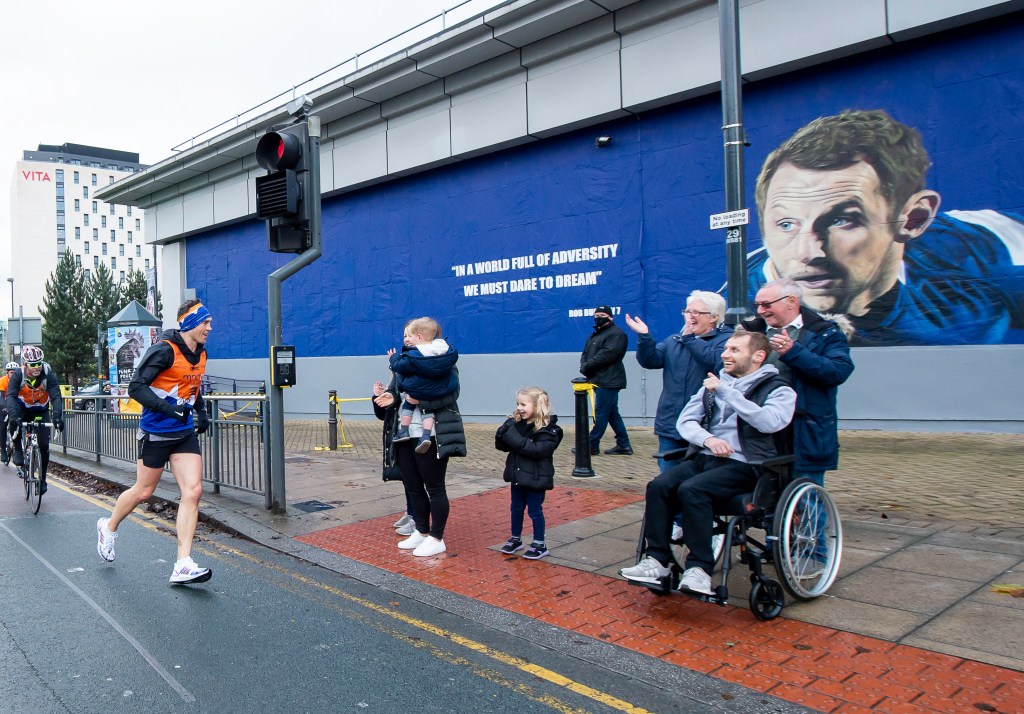
The afforementioned Kevin Sinfield was also a member of the Leeds Rhinos team that defeated anything in their path.
Also playing for Leeds Rhinos for his entire career, he was a teammate to Burrow for over a decade, and also played alongside him for England and Great Britain’s representative sides.
This relationship continued after rugby, as Sinfield worked with him to raise money and awareness for MND.
In December 2020, he ran seven marathons in seven days for the cause. For most people, running a single marathon is the absolute peak of their physicsal achievement. 26.2 miles. He did it every day for a week. He raised over £2 million, despite the original goal being £77,000.
Seven marathons, in support of his friend. His tiny friend, Rob Burrow.
Rob and Kev were recognised for their remarkable achievements at the 2022 Sports Personality of the Year awards, and both received CBEs. They spread the word about MND, and may have changed the lives of people across the world living with the disease.
Five years
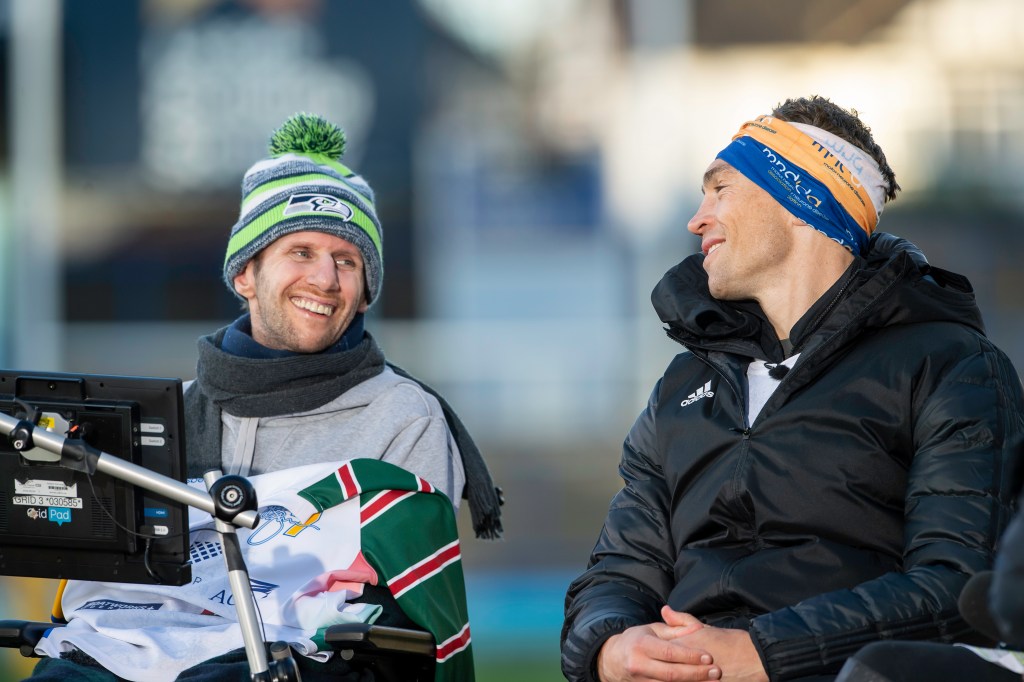
“When he passed away, five years later, the world mourned.“
For a man that was told he had a year to live in 2019, it’s incredible that he made it so far.
On the 2nd of June, 2024, the day that the Rob Burrow Centre, a treatment centre for people with MND, was supposed to begin construction, the news that everyone hoped would never come, came.
Rob Burrow had died. At the age of 41.
When diagnosed, the rugby league world was touched.
When he passed away, five years later, the world mourned.
People from all walks of life shared tributes, from England football fans at St. James Park to prominent figures in Australia.
Headingley was awash with people paying their respects, social media was filled with people sharing their personal memories of a great man.
“The inspiration that he has given everybody across the UK, who has been across this story, will live in the memories forever.”
Faced with the news, his family could certainly have been forgiven for not being in the public eye for a while, taking time to come to terms with it.
However, the Rob Burrow Centre commenced constuction the day after he died, with his family in attendance. A family full of bravery.
His final message was aired by the BBC the day following his passing.
“Whatever your personal battle, be brave and face it. Every single day is precious. In a world full of adversity, we must still dare to dream.
“Rob Burrow, over and out.”
There’s only one Rob Burrow
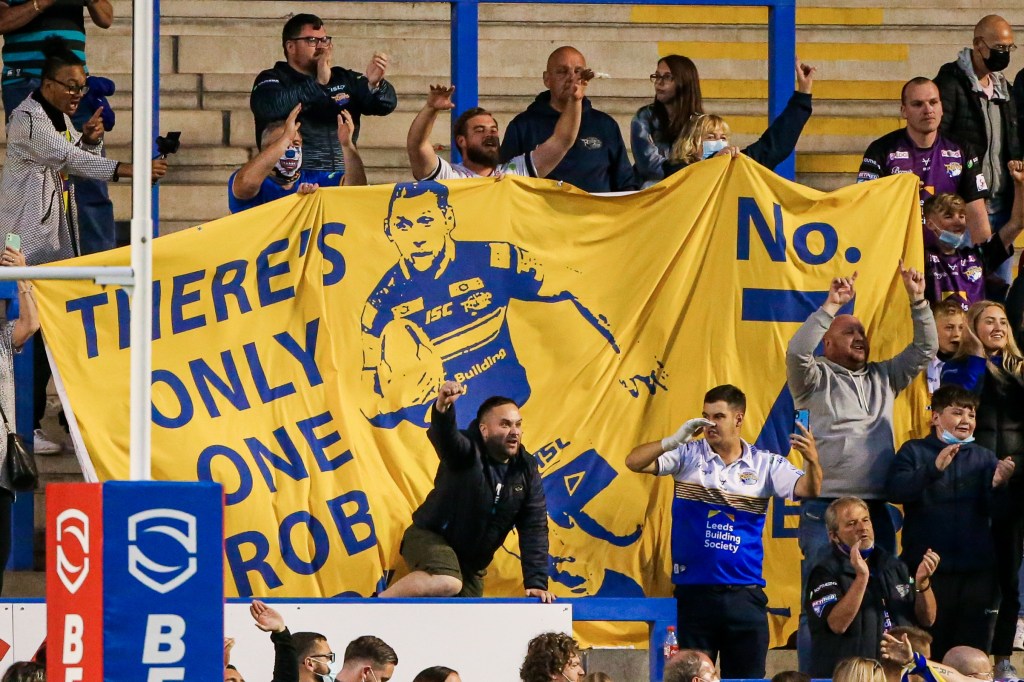
Kevin Sinfield, speaking to the BBC the day after his death, said: “The inspiration that he has given everybody across the UK, who has been across this story, will live in the memories forever.”
There’s only one Rob Burrow.
There’s only one Rob Burrow, but his memory, his legacy, will ensure that people after him will continue his work to fight for a cure for MND.
He may no longer be with us in person, but Rob Burrow, one way or another, will live forever.
You can donate to the fund for the Rob Burrow Centre here.
Featured image: Allan McKenzie/SWpix.com

 Ollie Mitchell
Leave a comment